



Air freight
Air freight is what you use when time costs more than transport. A production line waiting for a part, a launch that cannot slip, a medicine with a short shelf life. In those moments the price per kilo matters less than knowing exactly where the cargo is.
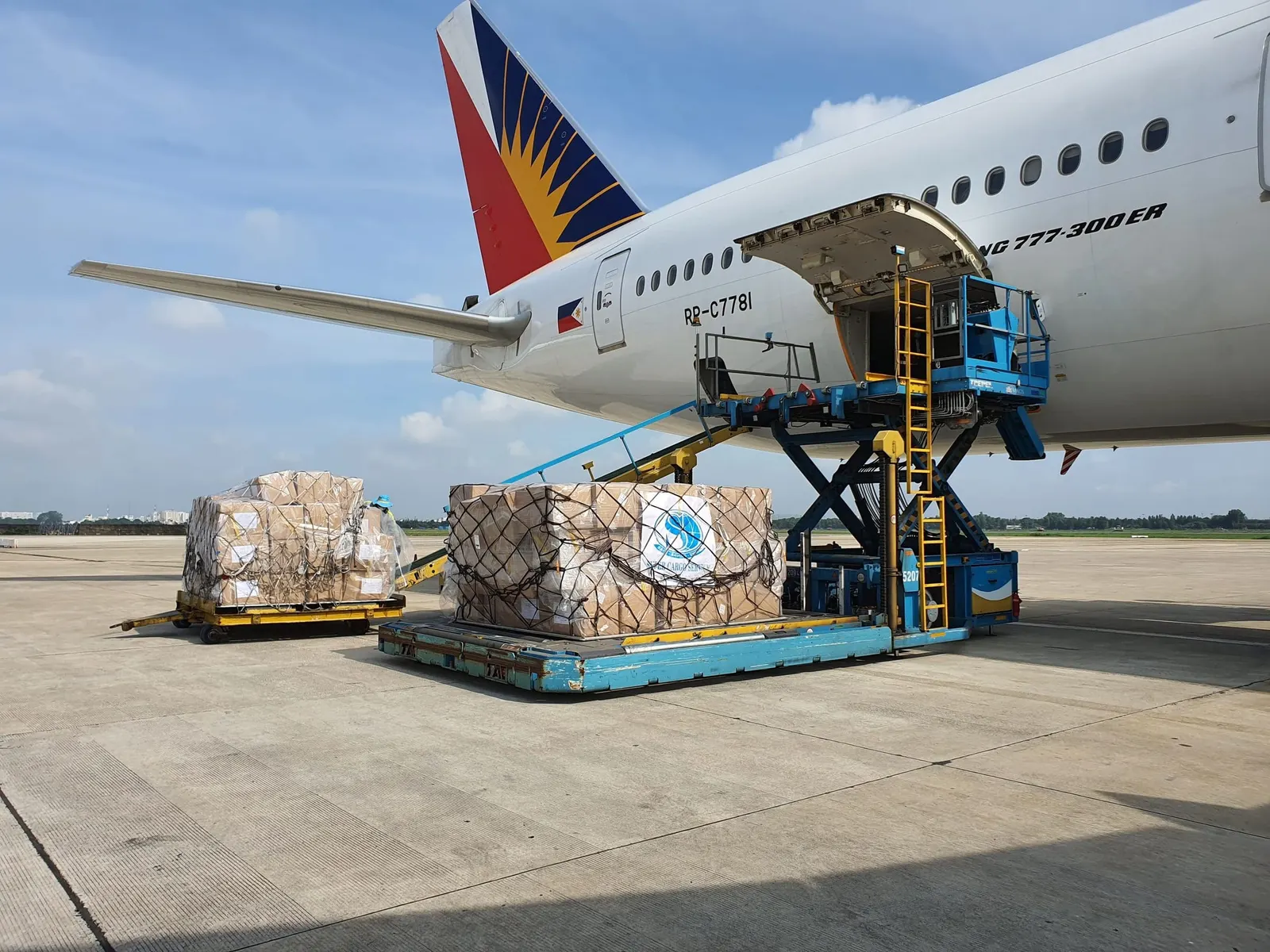
We run our own gateway teams at New York JFK, Frankfurt and Hong Kong. They receive your cargo, check it, build it onto pallets and see it onto the aircraft. When it lands, the same company breaks it down, clears it and delivers it.
For the busiest lanes out of Asia and Europe we hold weekly block space, which keeps rates steady and guarantees a seat when the market is tight.
What is included
Block space agreements
Weekly allocations on the busiest lanes out of Asia and Europe, priced below the spot market.
Gateway handling
Our own staff build and break down pallets at JFK, Frankfurt and Hong Kong, so your cargo is never anonymous.
Temperature control
Active and passive containers for 2–8 °C and 15–25 °C shipments, with data loggers on every pallet.
Dangerous goods
Lithium batteries, chemicals and samples, packed and declared by IATA-certified staff.
Choose how it moves
Express
Standard
Charter
Express
- Next flight out
The first available flight, with a courier at each end. For parts that stop a production line.
Standard
- 3–5 days
Consolidated with other shippers on scheduled freighters. The best balance of speed and price.
Charter
- Part or full aircraft
When the volume or the deadline will not fit on a scheduled flight, we charter the aircraft.
Further reading

Questions about air freight
How is air freight priced?
By chargeable weight, which is the greater of the actual weight and the volume weight (length × width × height in cm, divided by 6,000). Our guide to dimensional weight explains how to pack to keep it down.
Can you move medicines and vaccines?
Yes. Our Frankfurt and JFK gateways are IATA CEIV Pharma certified, and our Atlanta and Mumbai warehouses hold GDP certification for storage.